CSR
Our CSR policy is central to the our strategy and management culture. Building on strong governance and regular dialogue with its stakeholders, the policy rests on three pillars, namely environmental, societal and social.
“
Given the difficulties facing the industry, we must continue to innovate and strengthen our CSR commitments, particularly with regard to climate change and biodiversity, without giving up. These commitments are part of our identity. They are real differentiators for the company, even in our ReShapE strategic plan, which shows the importance of thinking now about resilient, environmentally-friendly and sustainable cities.
Véronique Mercier
Executive Commitee member in charge of CSR, Communication and Public Affairs
Aware that the city of tomorrow is being built together, we have set up numerous partnerships with our suppliers, customers, local authorities and architects, as well as with start-ups and the academic world.
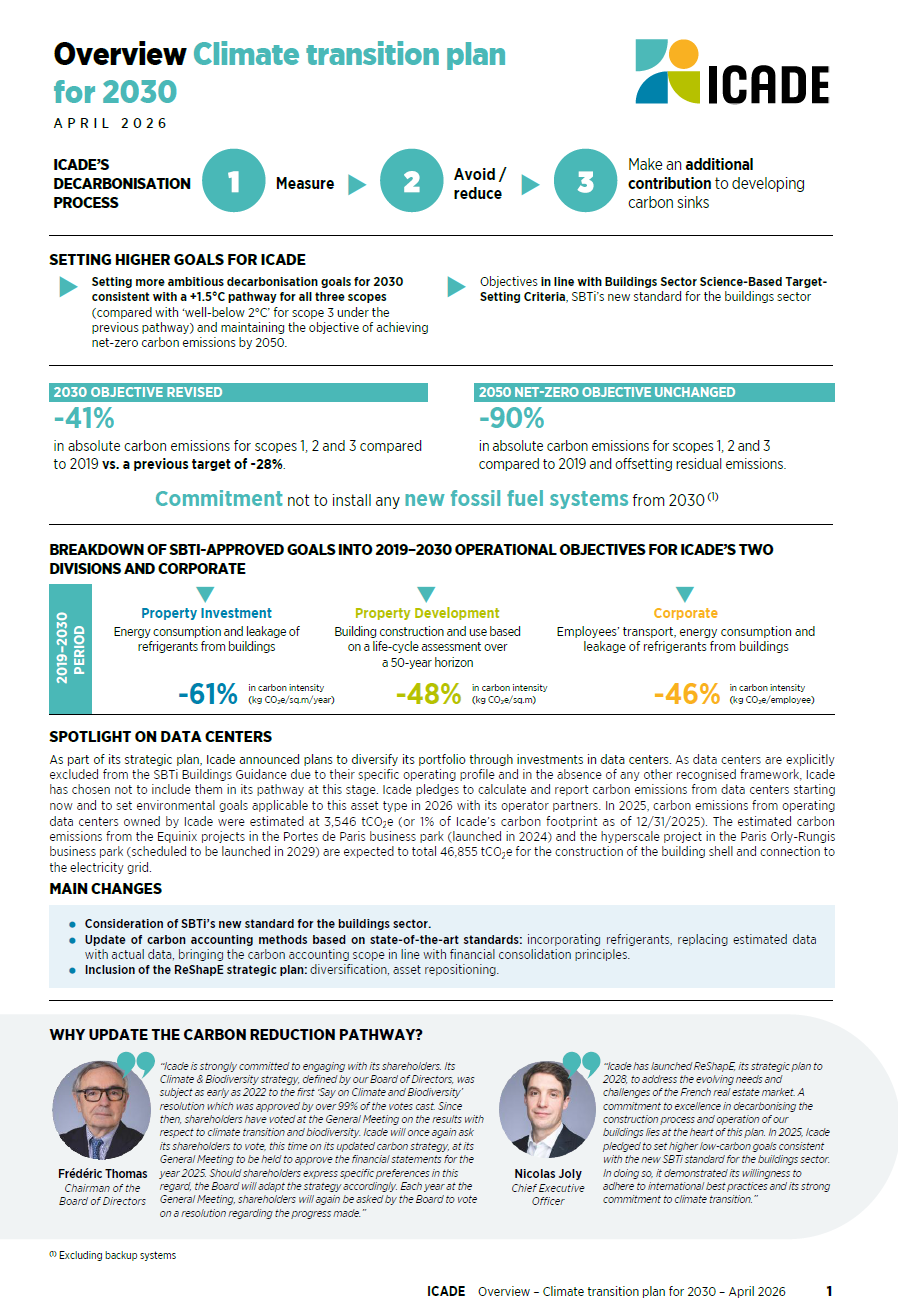
Aware that the city of tomorrow is being built today and that 80% of residential buildings of 2050 already exist, we have made the transformation of existing buildings and low-carbon design the cornerstones of our Villes de 2050 initiative.
This vision enables us to set ambitious targets and develop concrete solutions for energy efficiency, low-carbon living and mixed-use development, whilst building our vision around more complex issues such as digital technology, soil and biodiversity protection, and sustainable transport.
It also guides our work on complex challenges such as adapting neighbourhoods to climate change.
In this way, the Villes de 2050 initiative structures our approach to addressing tomorrow’s challenges today.
Environmental
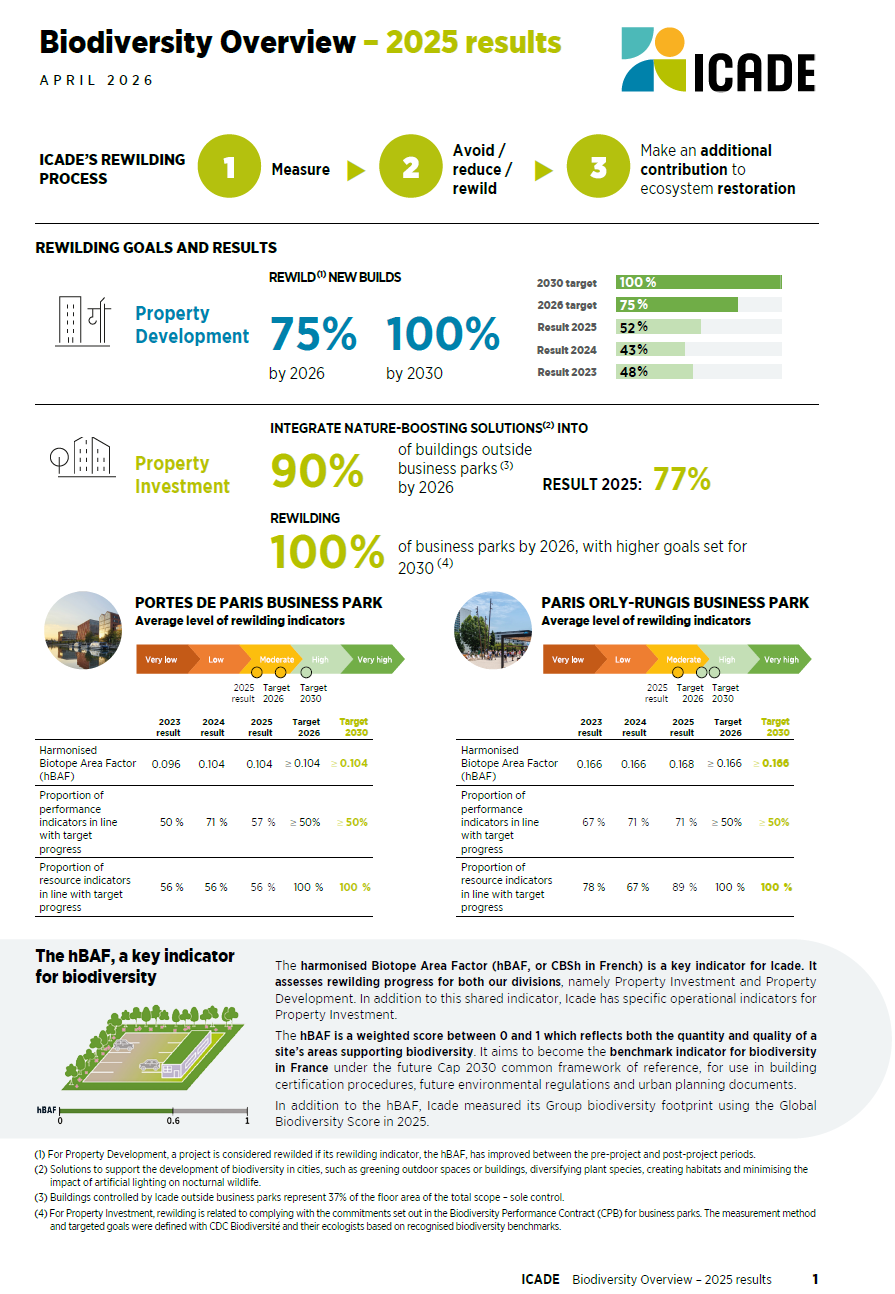
For many years, we have sought to reduce our environmental footprint through buildings whose energy consumption, resource requirements and impact on the climate and biodiversity is controlled by demanding certifications.
Societal
We support new practices with solutions that offer users both comfort and quality of life, and also strengthens its local impact with the development of affordable and inclusive housing and community-focused work to help the most vulnerable populations.
Social
Our social policy is designed to develop employees’ skills, make the company more appealing, improve the quality of life at work and promote diversity.
Five priority issues have been identified by our internal and external stakeholders. Particular attention is paid to these issues in the CSR commitments set out in the strategic plan:

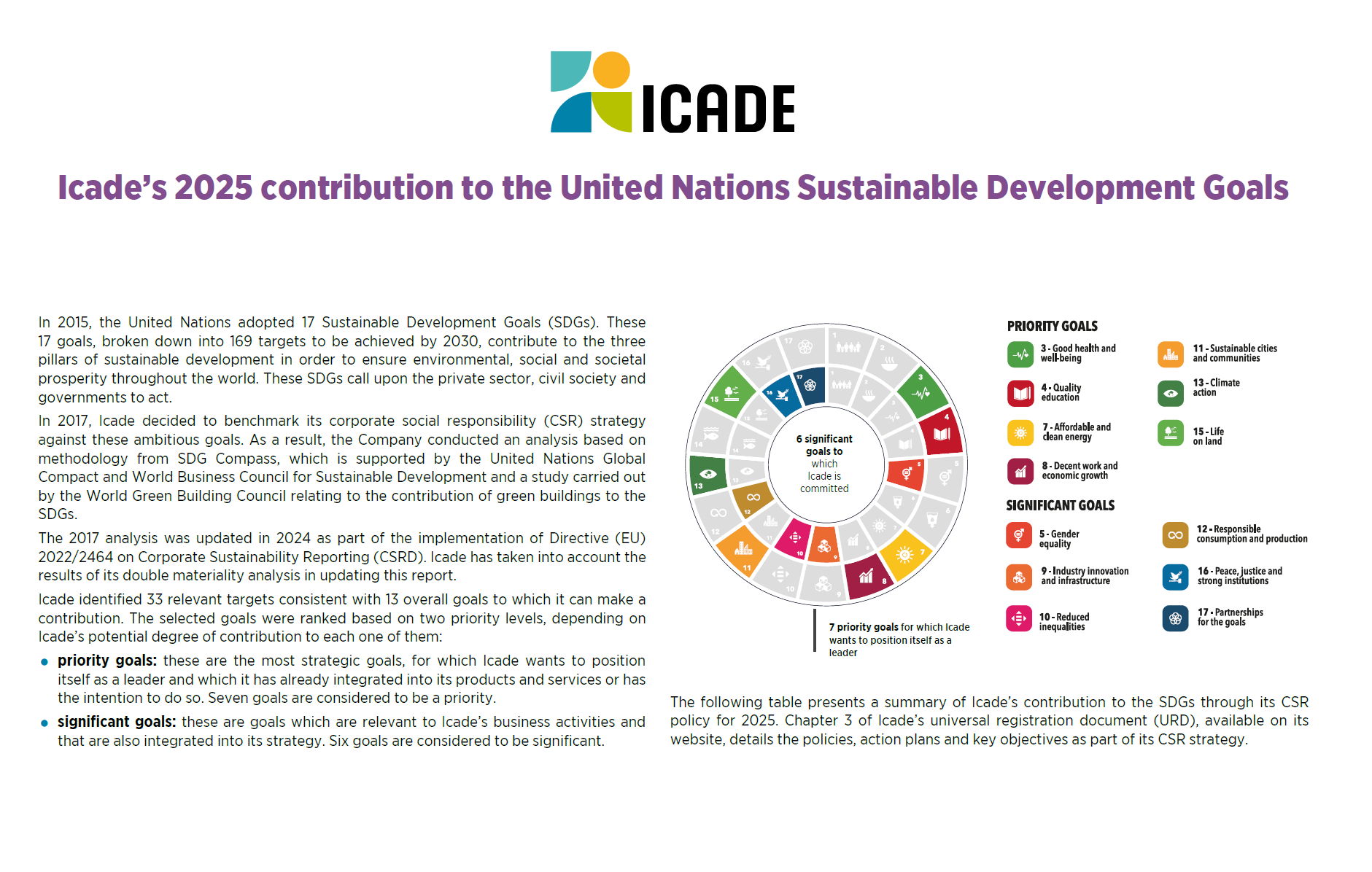
One of the ways the CSR issues were prioritised was by analysing the 17 UN Sustainable Development Goals (SDGs). We have defined seven priority goals for which we want to position ourselves as a leader and six significant goals to which it is strongly committed.

To implement its CSR policy, Icade's governance bodies ensure, each at their own level and according to their roles and responsibilities, that the company's activities take into account social, environmental and business conduct issues.
The Board of Directors endeavours to promote the creation of value by the company over the long term by considering the social, environmental and business conduct challenges of its activities. At least once a year, in line with the strategy it has defined, it examines the impacts, opportunities and risks, including social, environmental and business conduct risks, and the measures taken as a result.
It validates the work of the committees described below.
Contact

Fabienne Sapa
CSR Director






.jpg)
.jpg)